Farm shops, holiday lets and what grew out of the farm
The shop in the old byre, the two cottages in the yard, the baler that does the neighbours' silage. Ellie and Tom keep it all as one family's books, from your kitchen table, for a fee you have in writing before anything starts.
A shop and cottages up the valley
A kind of place on our books, up the valley from Kirkby Stephen
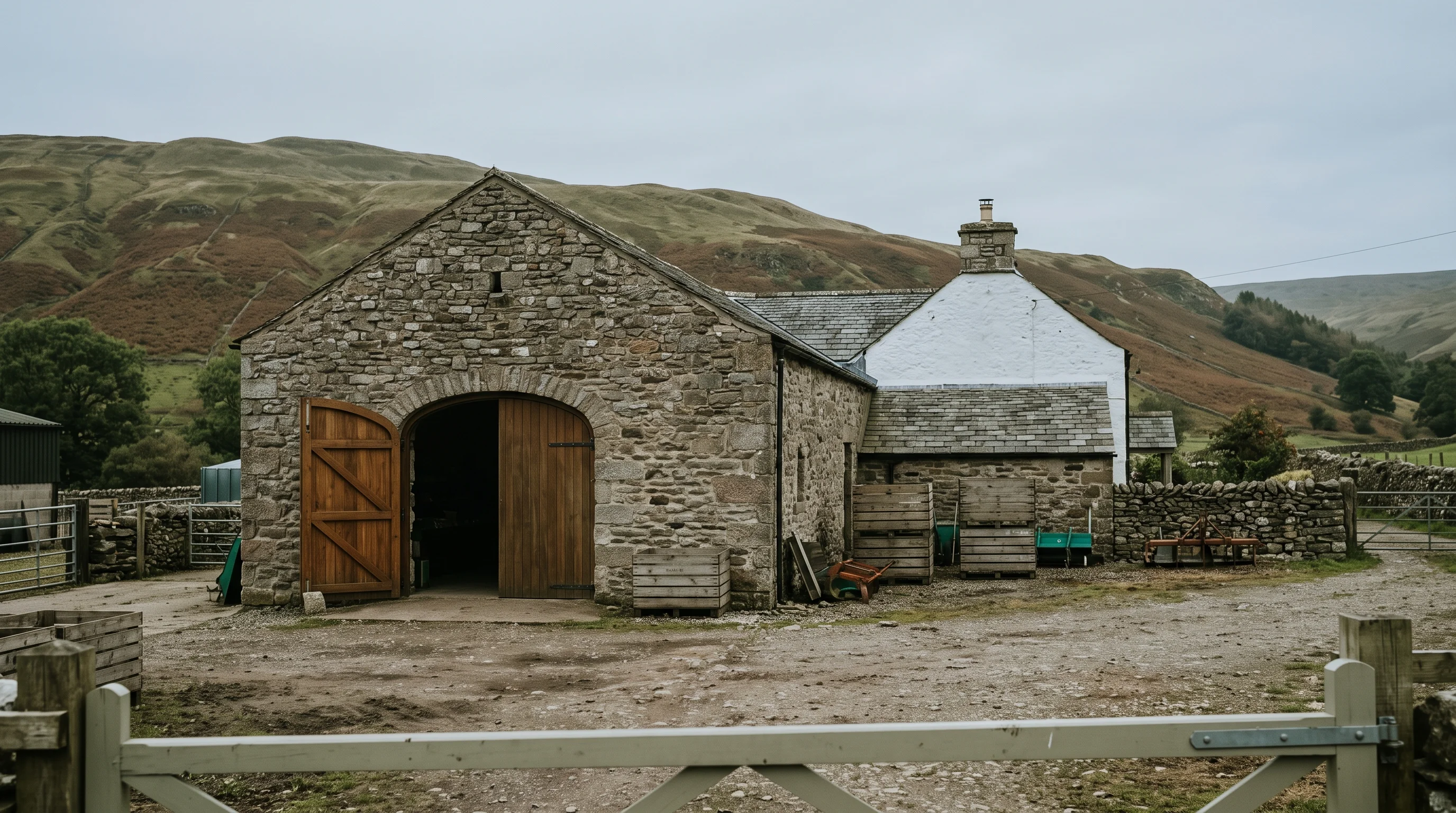
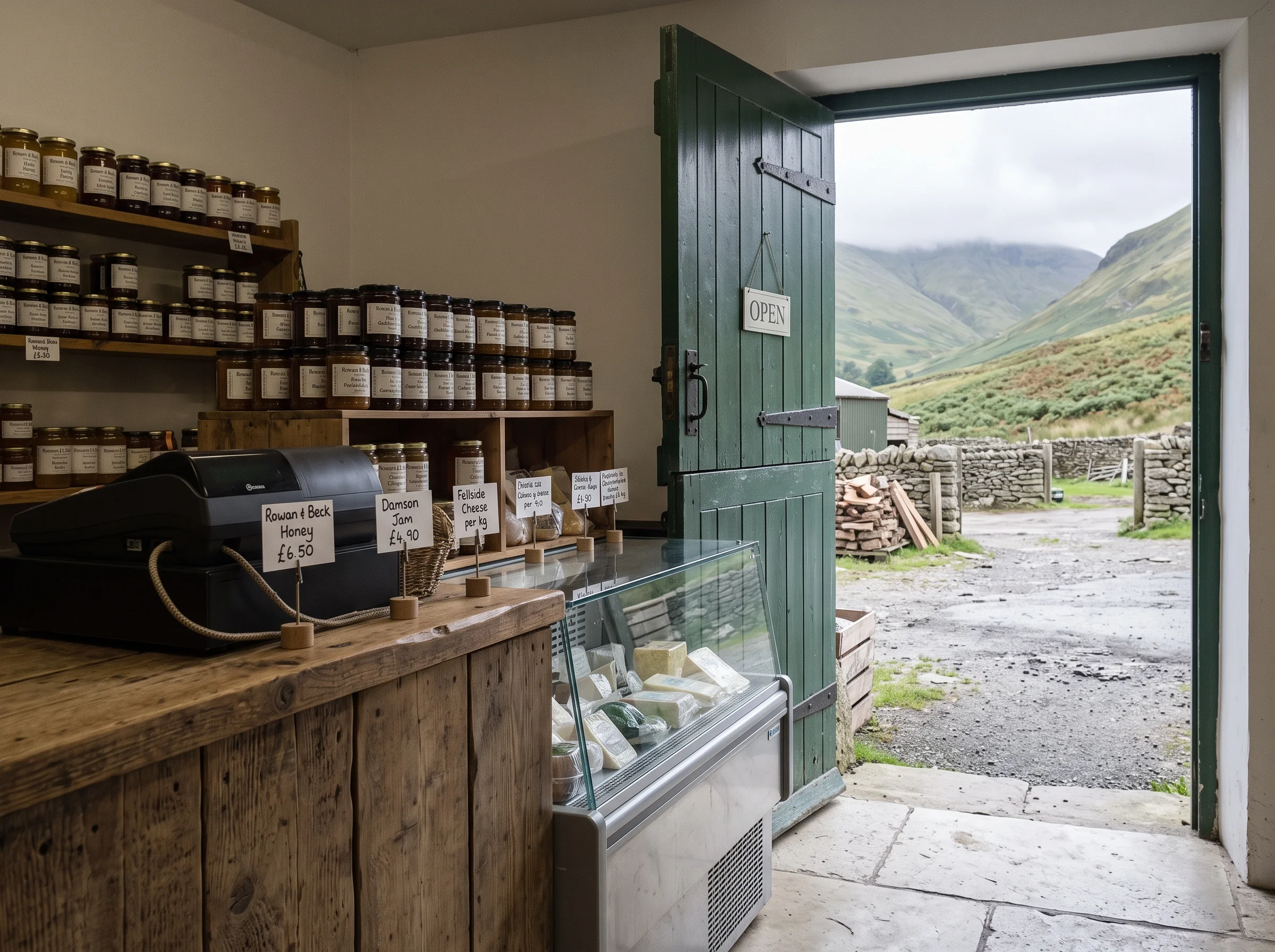
It starts, as it usually does, with a surplus. More lamb than the mart was paying for, a byre that had stood empty since the cows went, and a daughter back from college who could run a till. The byre became a shop. A few years on, the two cottages that had housed farm workers were done up and let to walkers, and the son took on a baler and began doing silage for the neighbours.
What the family runs now is four things on one farm: the flock, the shop, the cottages and the contracting. What they have with us is one set of books, one fixed fee and one of us who comes out, with the year planned round their season rather than ours. Records collected once the August changeovers are over. Accounts gone through at the kitchen table in the quiet of November. VAT done each quarter without anyone sitting up at midnight.
This is a kind of place we look after, not a named one. We don't put a neighbour's business on a website without asking, so what is described here is what the shop-and-cottages farms on our books have in common.
When the flock, the shop and the cottage share one set of books
Three kinds of money come into a diversified farm, each on its own calendar and each with its own VAT habits. The tangle is real. The answer is not a list of services; it is one set of books kept properly.
-
The farm
Stock sales from the mart, grant income and the merchant's account, arriving on the farm's own calendar and mostly carrying no VAT, because food and livestock are zero-rated.
-
The shop
Daily takings from the till, where most of the food carries no VAT but the hot pies, the drinks and the gifts do. Sorting the one from the other is where a shop's VAT return goes wrong if nobody is watching.
-
The cottages
Booking-site payouts that land after the commission has come off, cleaners and changeover costs, and VAT on the weeks themselves if the farm is already registered, because holiday letting counts as a trade where a long let does not.
One set of books, kept monthly or quarterly, with the VAT return made up from them.
We do the bookkeeping as often as the season needs it, so the till, the booking site and the mart all end up in the same place once, and the VAT return goes in from figures that are already straight rather than from a shoebox in March.
Holiday lets and property
For families letting a barn or a cottage up the valley, whether or not there is a farm behind it.
Letting a barn to walkers by the week is one thing in the eyes of the tax office; letting a cottage to a tenant on a twelve-month agreement is another. They are taxed differently, the costs you can claim differ, and they go on different pages of the return. A family up here often has one of each, and sometimes both in the same yard.
Making Tax Digital is the other thing on let owners' minds. In plain terms it means sending HMRC an update from software every quarter instead of one return a year. We have already taken lets up the valley through it, from choosing the software to sending the first update, and it is a good deal less alarming at a kitchen table than it is in a letter from HMRC.
What we cover
- The year's accounts for the lets, with cleaning, linen, repairs, booking commission and a fair share of the farm's bills claimed where they can be.
- The property pages of your Self Assessment return, or the partnership return where the cottages sit inside the farm.
- What the April 2025 change to the taxing of holiday lets means for yours, explained for your barn rather than in general.
- Making Tax Digital for landlords and let owners: the software set up and the quarterly updates sent, as we have already done for lets along the valley.
- VAT on the letting weeks where the wider business is registered, kept straight alongside the farm and the shop.
Seasonal staff and payroll
Shop weekends · summer changeovers · hay-time help
A couple of students on the till on Saturdays. A cleaner for the Friday and Monday turnarounds from Easter to October. A lad on the baler through July. Small teams, part-time, mostly seasonal, and every one of them still has to be paid properly and reported to HMRC on the day they are paid.
We run the payroll for teams like these: the payslips, the figures sent to HMRC each payday, the workplace pension where someone is due one, and the holiday pay that casual staff build up without anyone noticing. You can take someone on for the summer without taking on a second job at midnight.
Most of what grows out of a farm stays inside the family partnership, and that is usually right. Now and then the shop or the contracting gets big enough to want walls of its own. A limited company is a separate legal person: it files its own accounts at Companies House, pays corporation tax on its own profit, and pays you a salary or a dividend out of what is left. That can keep the risk of the contracting away from the land, and it can change how much tax is paid. It also brings its own paperwork, and the figures do not always come out in its favour.
If you decide to go that way, we do the company's accounts and corporation tax return each year alongside the farm's, so the two sit together rather than with two different accountants who never speak.
When the business becomes a company
Worth talking about when one part of the business is making well more than the family draws from it, when more than one household takes an income from it, or when the contracting carries a risk you would rather keep off the farm. We work it through with your real figures before anybody forms anything.
What a business like this pays
One fixed fee for the year, published, and in writing before any work starts.
The figure for a shop, a let or a mixed farm business depends on what the family actually runs. Two cottages with no VAT is a smaller year's work than a shop with a quarterly return and six people on the payroll, so we would rather give you the number for your place than print one here that fits nobody. Tell us what you run and you will have it before we start, and it does not move mid-year.
Fees by kind of placeWhat the fee is built from
- The year's accounts for the whole family business, farm, shop and cottages together
- The partnership or company return and each partner's own tax return
- Bookkeeping monthly or quarterly, and the VAT returns, where you want them done
- Making Tax Digital set-up and the quarterly updates for the lets
- Payroll for the shop and seasonal staff, if you have them
- Records collected from the farm if you would rather not post them, and the accounts gone through at your table
- If we miss a filing deadline that was ours to meet, we pay the penalty
Who looks after the shops and lets
Ellie RowanTom Beck
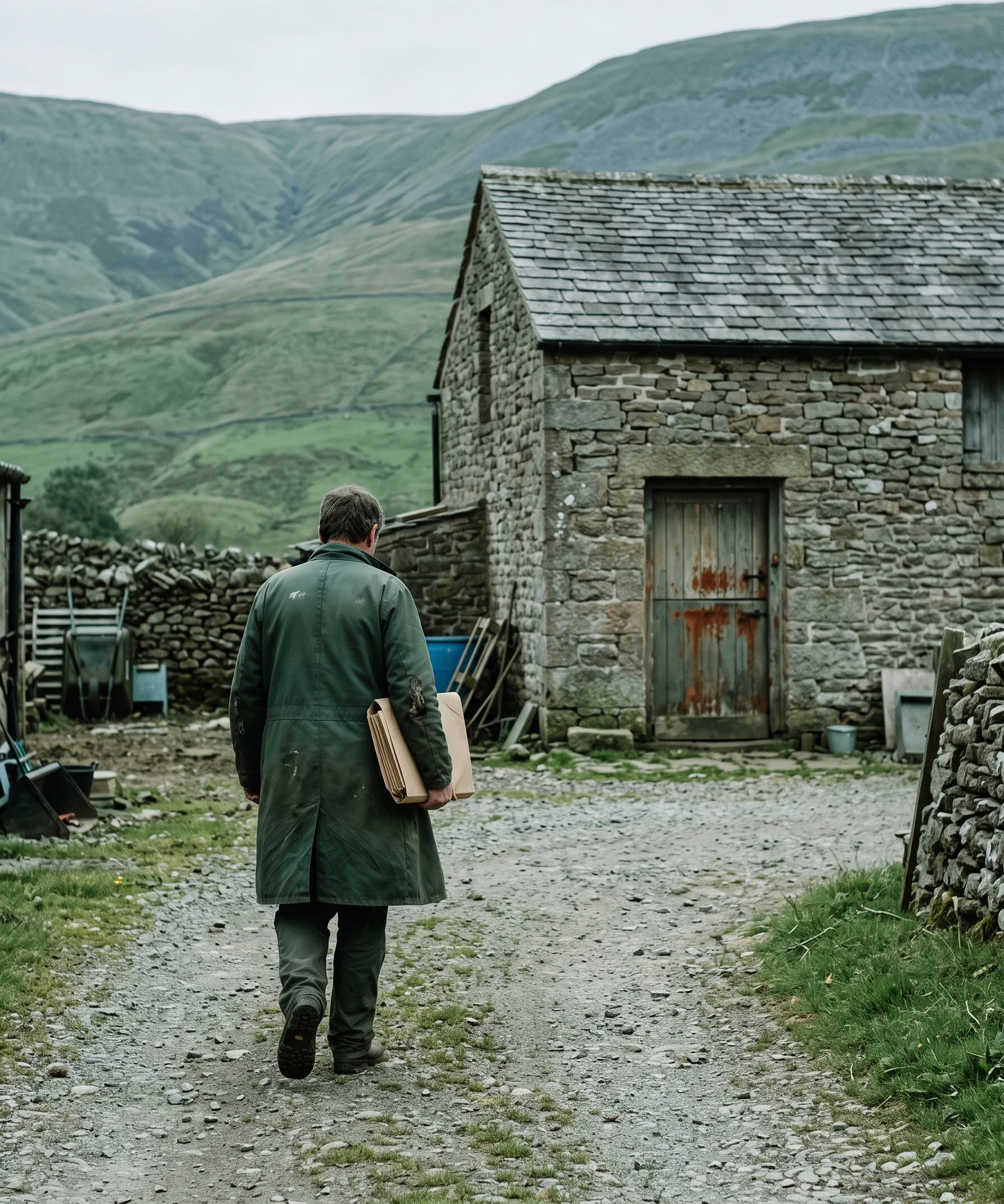
One of us. Before any work starts you have a letter with the fee on it and a name, Ellie Rowan or Tom Beck, and that is the partner you get. They come out to collect the records after the season, sit at your table to go through the accounts, and are the one who picks up when you ring about the VAT in March.
The same one next year, and the year after. There is no handover to someone you have never met, because there is nobody here you have never met.
Talk to Ellie or Tom or read about the two of them on their own page.
A neighbour's word
Among the ninety-six are people who run shops, cottages and mixed farm businesses along this valley.
We have not lifted their words onto this page. They read better where they were written, by people with no reason to be kind, and the valley is small enough that you very likely know one of them already. Ask at the shop counter or the changeover.
Ring, or switch
Rowan and Beck, above the bookshop on Market Street, Kirkby Stephen. Call in on a market day, or ask one of us to come out to the shop or the yard.- Monday to Wednesday
- 08:30–17:30
- Thursday
- 08:30–19:00
- Friday
- 08:30–16:00
Already with another accountant?
Switching is handled quietly and by us. We write to your old accountant, collect what we need from them, and pick up the books where they left off, between seasons if you like, so nothing is missed in the changeover.
How switching works