Farms and family partnerships
Accounts for hill farms and the families who run them, done at the kitchen table.
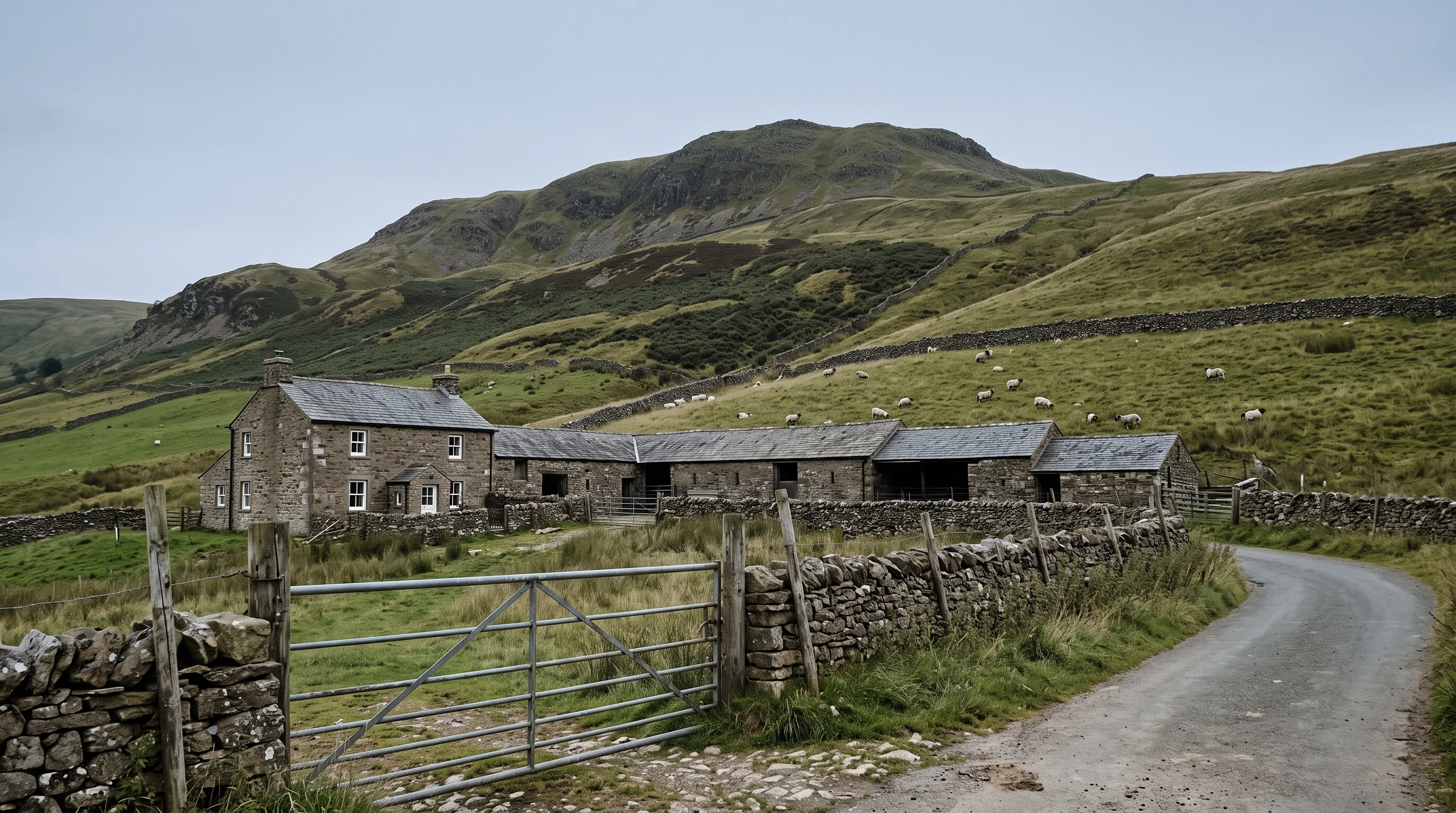
Sheep on the fell, a few sucklers, a partnership between two generations and a receipt box on the dresser. Ellie Rowan and Tom Beck have been coming out to farms like that across the upper Eden valley and the Howgills since 2012, and they come to you rather than asking you into town.
What a farm like this pays Making Tax Digital with paper records
A hill farm on the fell side
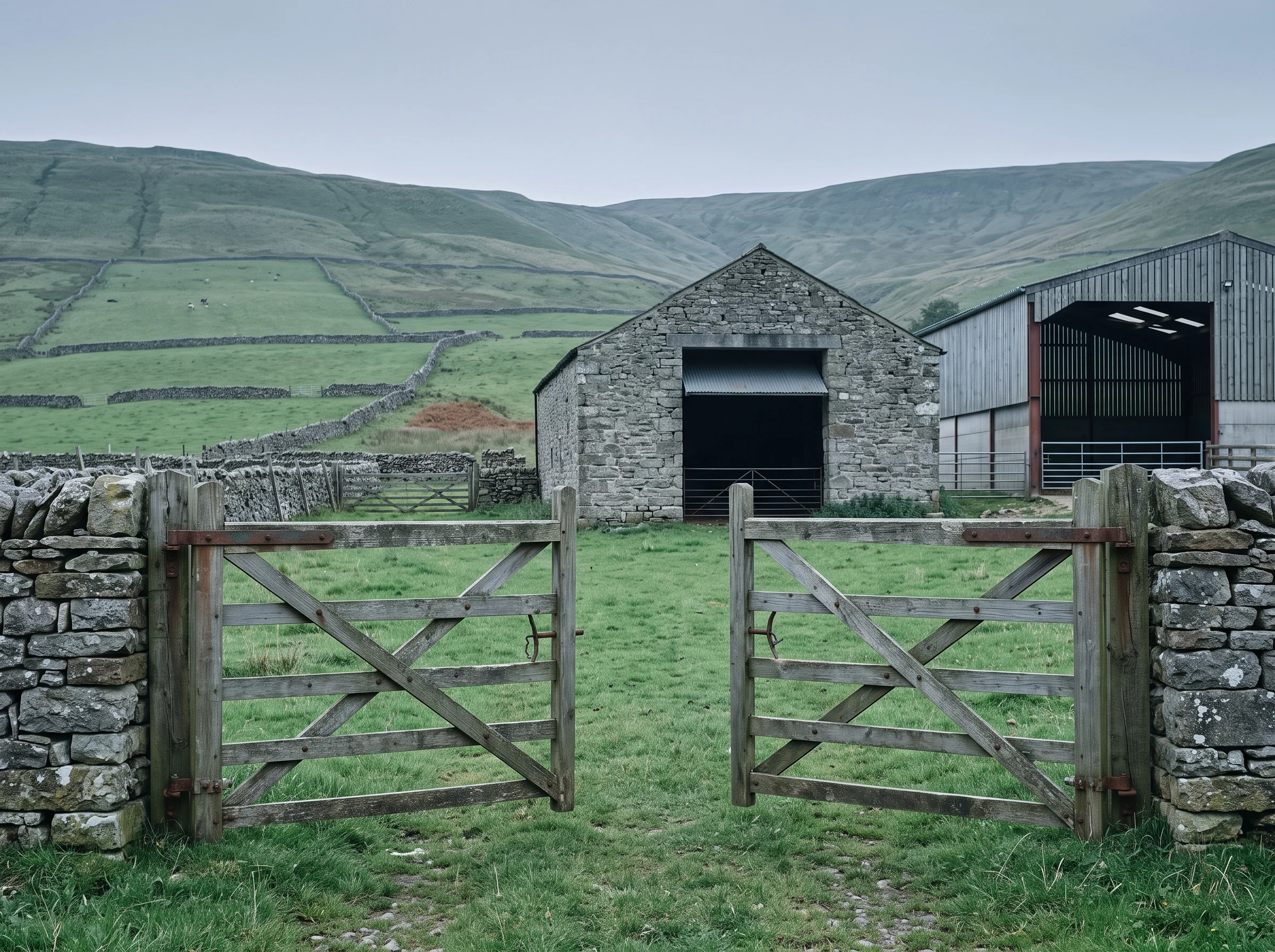
The shape of a farm we look after, without a name
Several hundred ewes on the fell and the intake, a small suckler herd on the better ground, and hay or silage off the bottom fields if the weather lets them. Two generations in the partnership: the parents, and a son or daughter who came home and now does most of the lambing.
Their year runs on the stock, not the calendar. The bank statements go in a drawer, the diary records what was sold at Kirkby Stephen mart and what the contractor charged, and the VAT comes round every quarter whether anyone has time for it or not.
Ellie or Tom come out twice a year. Once after the year end to go through the books at the table and put the partnership accounts and return together, and once in the quieter months to look ahead: what is coming in, what the tax will be, and whether the way the partnership is split still suits the family.
The farming year, and where we come in
You already live by a year that has nothing to do with the tax year. We fit the paperwork round it, so the accounts never land in the middle of lambing.
-
March to May
Lambing and calving
We stay out of the way. If a lad or a student is taken on for the month, we run the payroll for them so the pay and the paperwork are right without you touching it.
-
June to August
Hay, silage and shearing
The quarter's VAT return gets done from the bank statements and the invoices, contractor bills included. If the farm is in a repayment position, we see that it goes in on time so the money comes back when the fuel bill lands.
-
September to November
Sales and tupping
Lambs and store cattle go through the mart, so this is when we look at what the year's likely to show and what tax will be due in January, in time for you to do something about it rather than hear about it afterwards.
-
December to February
Year end and the quiet months
The farm accounts and the partnership return are put together and gone through with you at the table, each partner's share explained in plain English, and the Self Assessment returns filed by the end of January.
What a farm visit is for
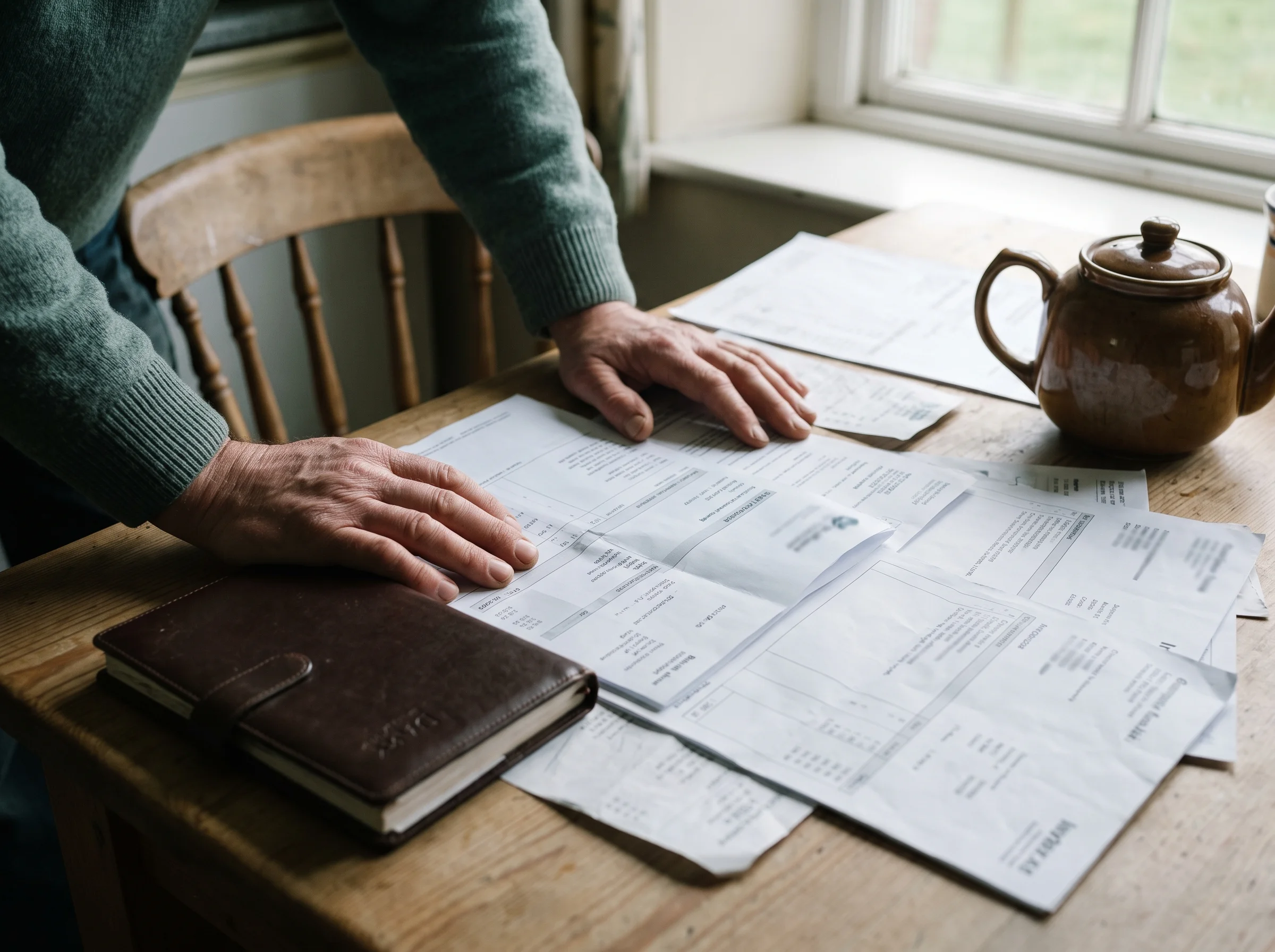
Have out whatever you have: the bank statements, the diary, the mart slips, the invoices and the box of receipts. It does not need sorting first. Sorting it is part of what we come for.
On the day we go through the year with you. What was bought and sold, what the contractor and the vet were paid, what was spent on the house and what on the farm, and anything that happened that the bank statement does not explain. We ask the questions there, so the accounts are finished from one visit and not from a month of letters.
We do it at the farm because that is where the answers are. The diary is on the dresser, the invoices are in the drawer, and the person who knows which of the sucklers was sold is in the next field, not in Kirkby Stephen on a Tuesday afternoon.
If a visit is not convenient, one of us collects the records and brings them back. You never have to post a year's paperwork, and you never have to drive it into town.
Making Tax Digital on a farm with paper records
Making Tax Digital means HMRC wants the farm's income and costs kept in software and sent to them in short updates through the year, instead of one return after the year end. It is coming in by stages. Sole traders and landlords come first: from April 2026 if their qualifying income was over £50,000, from April 2027 over £30,000, and from April 2028 over £20,000. Partnerships, which is how most family farms are run, are not in it yet; HMRC will set their date later. We tell each farm when its turn is coming.
Farms up the valley have already been through this with us, including ones that started from a receipt box and a yard where a phone signal is a rumour. This is how it goes.
-
You carry on keeping records the way you keep them.
Diary, drawer, box. Nobody is asked to buy a laptop or learn a program. If you want to, we will show you; if you do not, nothing changes in the kitchen.
-
Every quarter the records come to us.
One of us collects them from the farm, or you drop them at the office above the bookshop when you are in Kirkby Stephen anyway. Photographs of invoices sent from the yard are fine too, when the signal allows.
-
We put the quarter into the software and send the update.
The digital record HMRC asks for is kept by us, on your behalf. You get a short note in plain English saying what went in and whether anything looks out of the ordinary.
-
After the year end we still come out to the table.
The four updates are tidied into the year's accounts, the partnership return is finished and the final figures sent, and we sit with you and go through them as we always have.
-
If a deadline that was ours to meet is missed, we pay the penalty.
The dates for the updates are ours to watch. That is written into the agreement, so the change costs you nothing in worry.
What a farm like this pays
One fixed fee for the farm's year, agreed in writing before we start.
Our fees are fixed and published, and the figure for a farm and partnership of this kind is given to you plainly when you ring or when one of us first comes out. It goes down in writing before any work begins, and it does not move during the year because the lambing was late or the box of receipts was fuller than usual.
Ellie or Tom, whichever of them looks after your farm, is the one who agrees it with you and the one who stands by it.
What a business like yours pays The fees for farms, farm shops, holiday lets, trades and landlords, and how each one is agreed.What the farm's fee covers
- The farm accounts and the partnership return, with each partner's share explained
- Self Assessment returns for the partners
- The quarterly VAT returns
- Making Tax Digital set-up and the quarterly updates when the farm's turn comes
- The visits to the kitchen table, and collecting the records if you would rather not post them
- Picking up the phone during the year, with no clock running
Payroll for seasonal or small teams is added only if the farm employs someone, and is agreed in the same way.
Who looks after the farms
A farm that comes to Rowan and Beck is given one of the two partners at the start, by name. That partner does the first visit, puts the accounts together, agrees the fee and answers the phone. There is nobody between you and them.
It is the same person the following year, and the year after that. They will know which field floods, which son is coming into the partnership and what was agreed about the house, because they were at the table when it was talked about.
A neighbour's word
Farming families up the valley have written about Rowan and Beck in their own words on Google, and what they come back to is the plain English, the kitchen table and the same face year after year.
We have left their words where they wrote them rather than lifting a line or two onto this page. Read them there, or ask the next farmer you see at the mart.
Ring, or switch
Rowan and Beck, above the bookshop on Market Street, Kirkby Stephen. Or ask one of us to come out to the farm. Talk to Ellie or Tom- Monday to Wednesday
- 08:30–17:30
- Thursday
- 08:30–19:00
- Friday
- 08:30–16:00
When the office is open
Moving the farm from another accountant
It is done quietly and we handle it. We write to your old accountant, collect the records and the past returns, and pick up the farm's year where they left it. You do not have to have the conversation.
How switching works