Skip to content
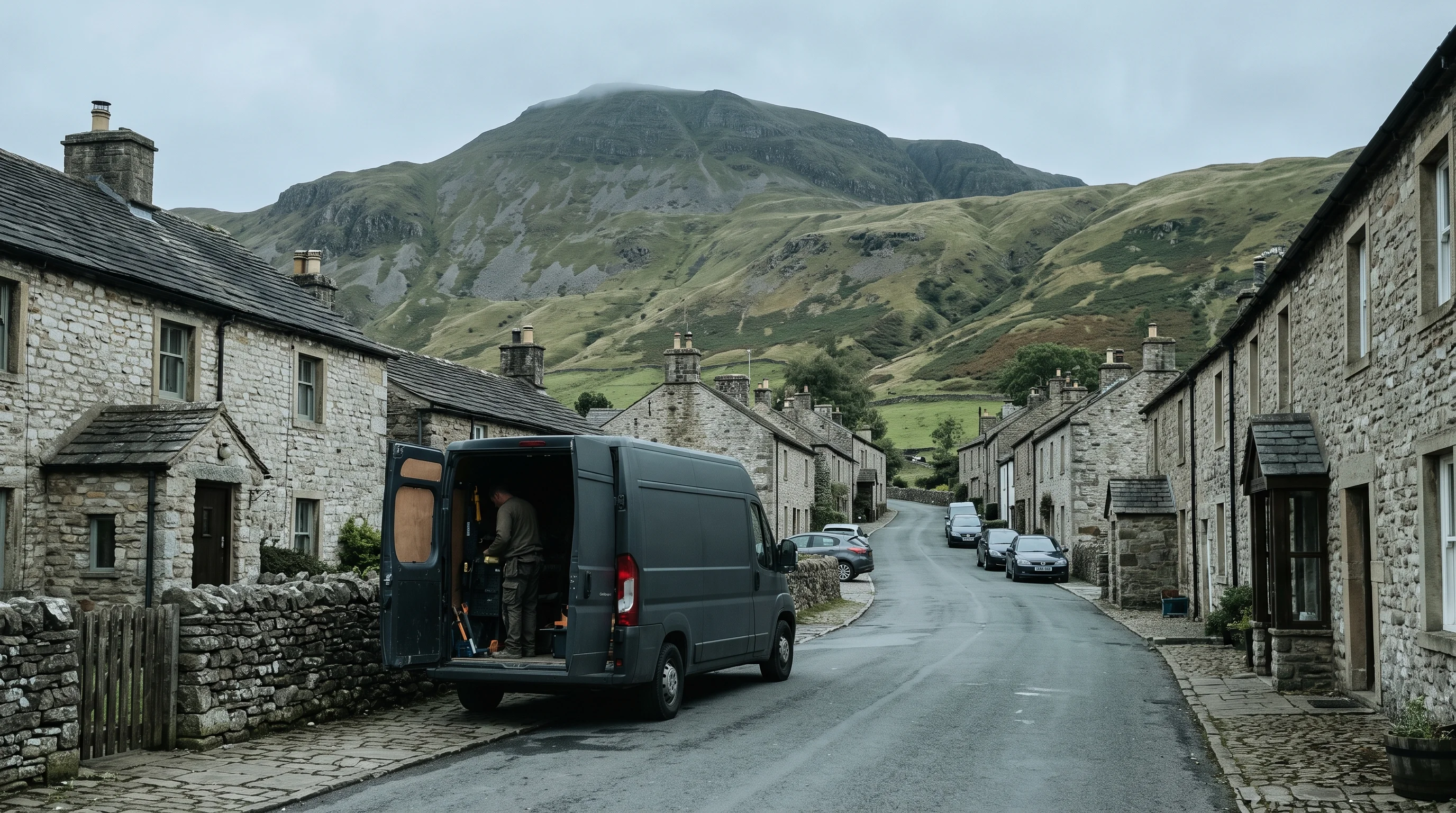
A work van with its back doors open on a stone village street, a fell closing the end of the road under cloud
A village street in the upper Eden valley, mid-morning, mid-job.

Trades, sole traders and landlords

For the joiner, the contractor and the landlord with a house or two let out.

Self Assessment in plain English, Making Tax Digital done for the first time without a fuss, and Ellie or Tom sitting down with you wherever suits: the office above the bookshop, your kitchen, or the cab of the van.

What someone like you pays
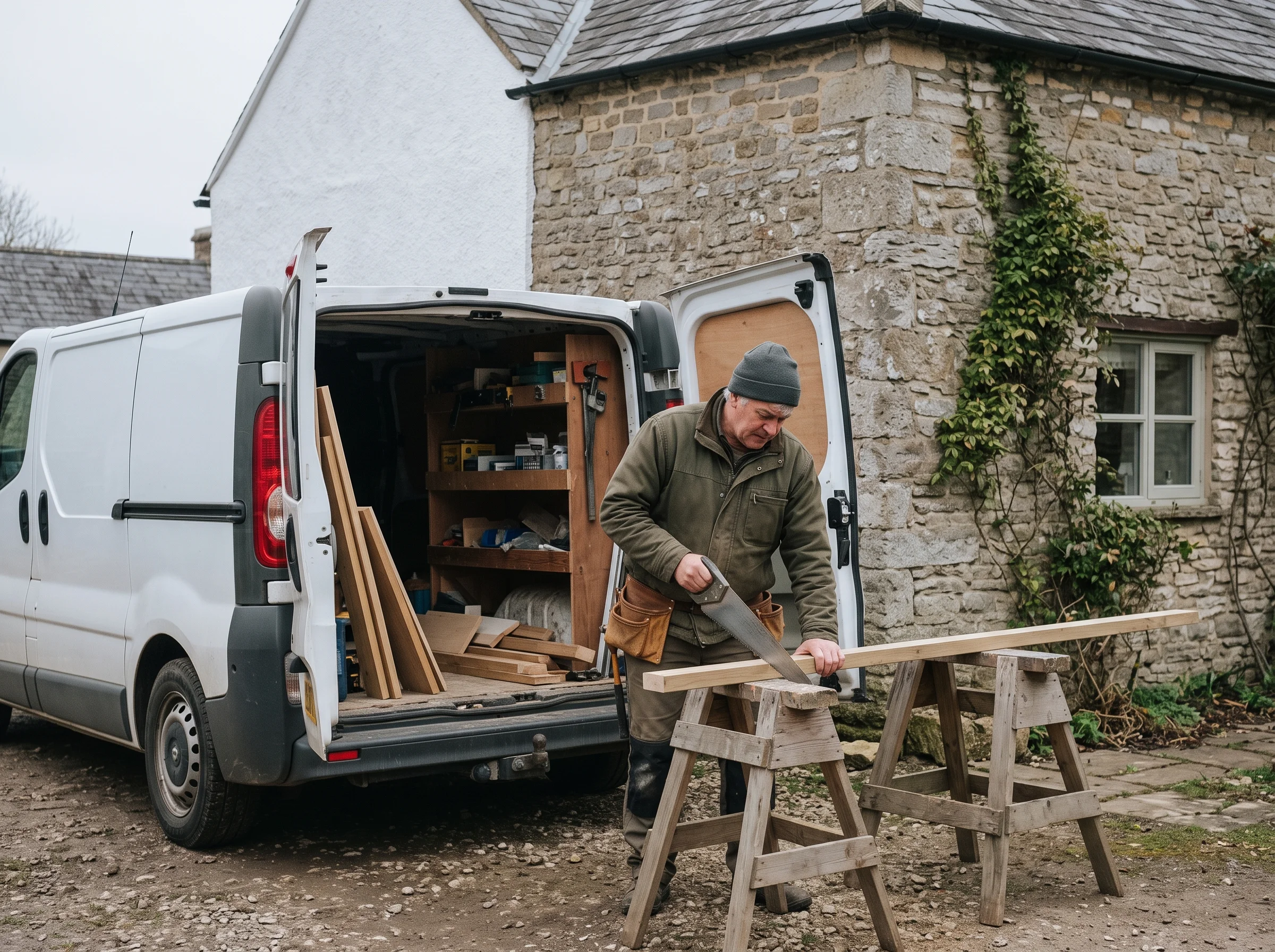
A joiner cutting a length of timber on a trestle at the back of a van outside a stone cottage
A joiner's working morning, somewhere between Brough and Kirkby Stephen.

A joiner, working out of a van

Villages between Brough and Kirkby Stephen

A joiner up here is on site by half seven and back after dark half the year. The invoices are written at the kitchen table on a Sunday, the receipts live in the door pocket of the van, and the tax return is the thing that gets put off until January.

For a trade like this, the records arrive once a year in a carrier bag, or once a quarter photographed on a phone, and either is fine. Ellie or Tom goes through them, asks the three or four questions that matter, and files the return well before the deadline. The conversation happens in the evening or on a Thursday, when the practice is open until seven.

This is a kind of trade we look after, not a named client. We do not put a neighbour's name or van on a website without asking.
Self Assessment in plain English

Self Assessment is the yearly return that tells the tax office what you earned from your trade or your lets, what it cost you to earn it, and what tax is due on the difference. That is all it is. Here is how it goes with us.

  1. You give us the year

    Invoices, receipts, bank statements, and for landlords the rent received and what the house cost you. A bag, a box or a folder on your phone, whichever you have.

  2. We sort it and ask what we need to

    We work out what counts as a cost of the trade, claim what you are entitled to, and ring you about anything unclear rather than guessing.

  3. You see the figure before it goes

    We tell you in plain words what is owed and when, you say yes, and we file it. If a filing date was ours to meet and it is missed, we pay the penalty.

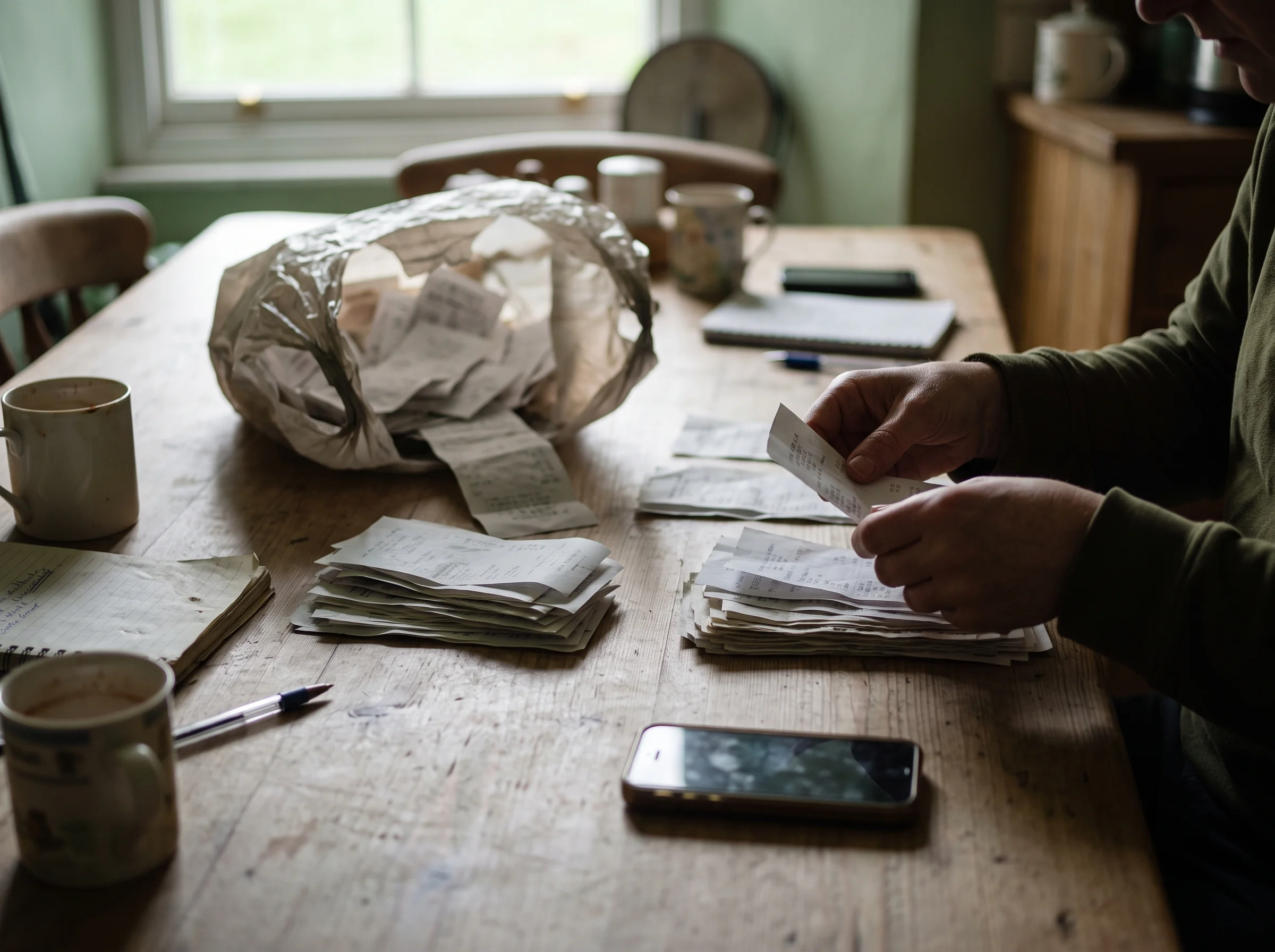
Receipts tipped out of a carrier bag being sorted into piles on a kitchen table, a phone lying face down beside them
Where most people start. It is a perfectly good place to start.

Making Tax Digital for the first time

Making Tax Digital means the tax office wants your trade or rental income kept in a digital record and a short update sent four times a year, instead of one return in January. For a sole trader or a landlord with a bag of receipts and a phone that loses signal past the cattle grid, that sounds worse than it is. Farms and holiday lets up the valley have already been walked through it. This is the walk.

  1. We sit down with last year's return and the bag

    At your table or ours. We work out whether the rules reach you yet, and if so from when, so nothing is done before it needs to be.

  2. We pick the simplest way to keep the record

    For most people that is photographing receipts on a phone as they come in, which works offline and catches up when you are back in signal. If you would rather hand the bag over and have us do it, that is bookkeeping, and it is below.

  3. We set the software up and link it to the tax office

    You do not choose a package, compare plans or sit through a webinar. We set it up, we show you the one thing you need to do on it, and we hold the login with you.

  4. Every quarter, we send the update for you

    We check what has come in, chase anything missing with one phone call, and file the quarterly update on your behalf. You get a short note saying it has gone.

  5. The year end is the year end, as before

    The final figures are tidied, you see what is owed in plain words, and the return goes in. By the second year most people have stopped thinking about it.

Nothing here is automatic. The record is only as good as what goes into it, which is why we look at it each quarter rather than letting software file whatever it finds.

Bookkeeping, if you want it

Some people are happy photographing receipts as they go. Plenty are not, and would rather spend Sunday evening anywhere but at the kitchen table with a pile of paper.

If that is you, hand the bag over monthly or quarterly and we keep the books. The invoices, the receipts and the bank statements are entered, matched and tidied by us, so the quarterly update and the year-end return are built on something we have already seen. It is priced as part of your fixed fee and agreed in writing like everything else, so you know what it adds before you decide.

What someone like you pays

One fixed fee, agreed in writing before we start.

Set for a sole trader or a landlord of your kind, told to you in plain figures by Ellie or Tom, and not changed once it is written down.

  • The fee depends on three plain things: whether you trade, let property or both; whether Making Tax Digital reaches you yet and you want the quarterly updates done for you; and whether you want us to keep the books.
  • Whatever shape yours takes, it is one figure for the year, written down before any work begins, with the Self Assessment return and the questions through the year inside it.
  • If a filing deadline that was ours to meet is missed, we pay the penalty, not you.
Fees by kind of place How the fee for a trade or a landlord is arrived at, alongside the farms and the shops. Go to the fees page
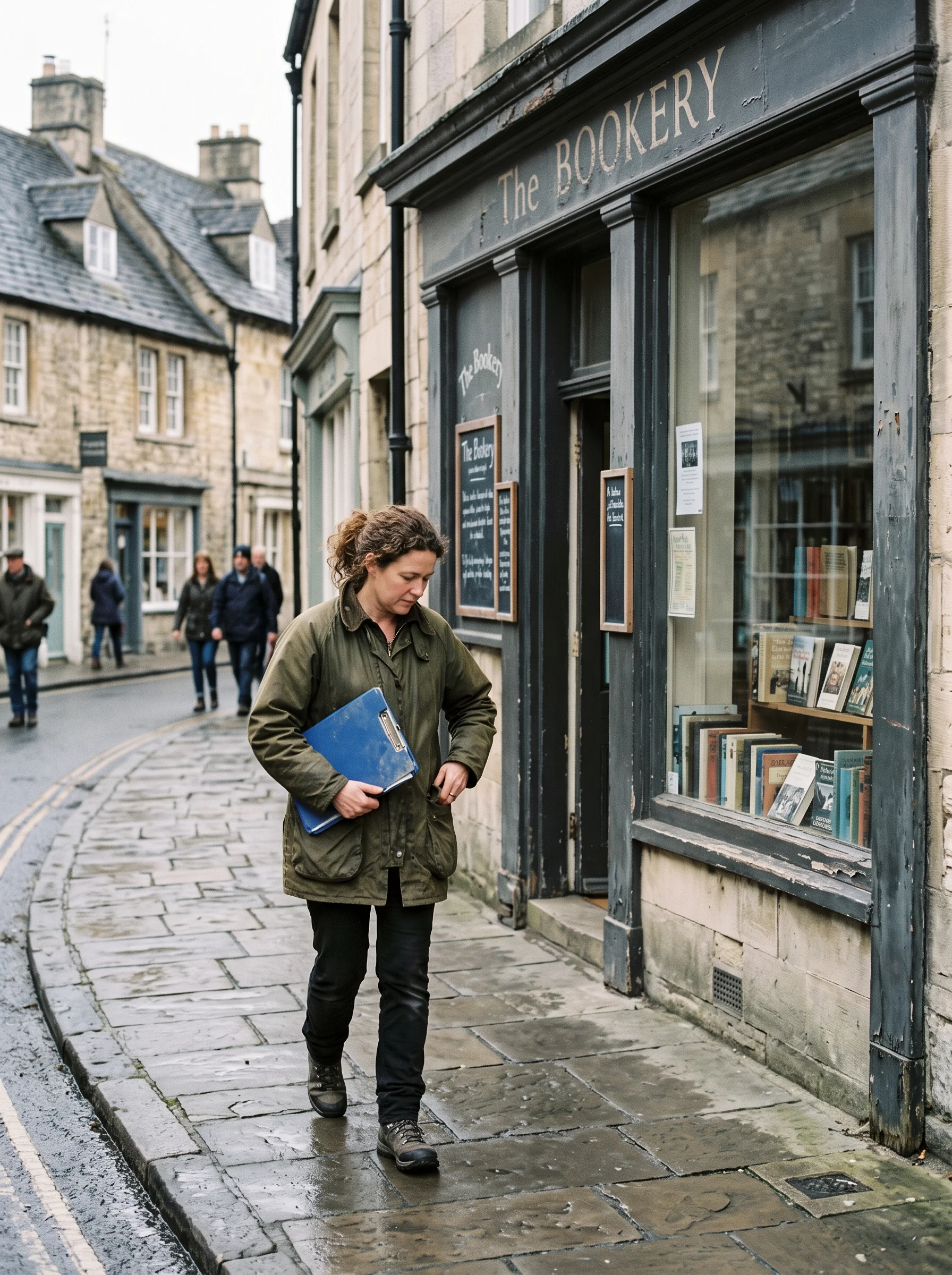
An accountant in a working coat with a folder under one arm outside a bookshop on a stone market street in the rain
Ellie Rowan or Tom Beck Market Street, above the bookshop, on a wet Thursday

Who looks after trades and landlords

One of the two partners. Whichever of Ellie or Tom you sit down with first is the one who learns how your week runs, where your receipts live and which of your houses has the boiler that keeps going, and that is the one who picks up the phone next year, and the year after.

There is no desk between you and them, and no one junior who takes the message. Ring on a Thursday evening and you get the person who did your return.

Meet Ellie and Tom Open until seven on Thursdays.

A neighbour's word

4.9 out of 5 from 96 Google reviews

We have not picked two of those reviews to set here. They are better read where they were written, by people who had no reason to be kind, and a trade in this valley would rather hear it from the fellow in the next van than from us anyway. Ask around Kirkby Stephen, Brough or Appleby and you will likely find someone you already know who is on our books.

Ring, or switch

Rowan and Beck, above the bookshop on Market Street, Kirkby Stephen. Call in on your way through, or ask one of us to come to you after the day's work.
Monday to Wednesday
08:30–17:30
Thursday
08:30–19:00
Friday
08:30–16:00
Talk to Ellie or Tom

Already with another accountant?

Switching is handled quietly and by us. We write to your old accountant, collect what we need from them, and pick up the return where they left it. You do not have to make the call.

How switching works